Capture the context
Keep the source and customer needs together so the next colleague can continue the conversation without starting again.
Industry solutions
Explore how the three CX Suite products — LeadMe, SurveyMe and CaseMe — support this industry, with use cases, workflows, responsibilities and measures.
Explore all three products ↓
Illustrative operating examples, not client results or a promised return.
A person enquires through WhatsApp after seeing a Pilates or HIIT campaign. Capture the class interest, preferred studio and a suitable trial time. The team confirms availability and the agreed booking, then follows up a missed visit. After attendance, record whether the person joined, needs another conversation or decided not to proceed.
Across several studios, keep trial requests tied to their campaign and location. Staff can see which enquiries need a callback and which trials have a confirmed place. Capacity, membership terms and any suitability advice stay with the studio's approved systems and qualified team.
Explore LeadMe in detailKeep the source and customer needs together so the next colleague can continue the conversation without starting again.
Assign a responsible colleague, agree the follow-up and confirm availability before committing to an appointment. Connected calendars and messaging are configured for the agreed rollout.
Record attendance and the eventual decision. Separate enquiries, requests and confirmed outcomes so management can see where opportunities stop progressing.
Class interest; studio; trial preference; source; booking status; attendance; membership outcome
Studio membership advisor or front-desk team
Trial requests, confirmed bookings, attendance, missed-visit follow-up and trial-to-membership outcomes
Start with your own baseline and compare like-for-like periods after rollout. Use confirmed activity and outcomes to assess performance; illustrative examples are not guaranteed results.
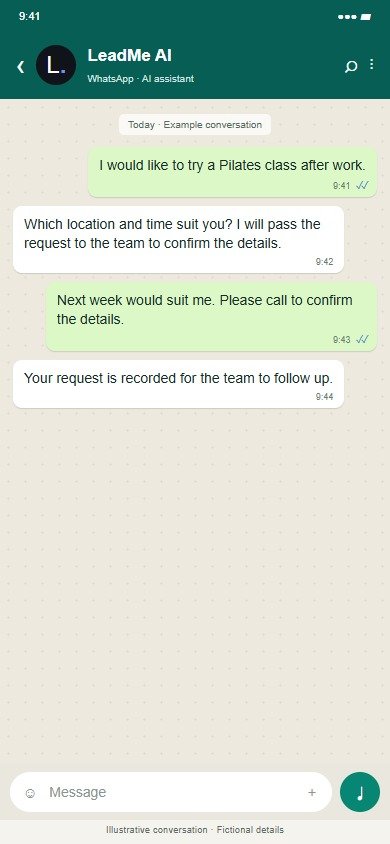
Illustrative conversation with fictional details; wording and connections are agreed before rollout.
Illustrative operating examples, not client results or a promised return.
A studio group invites member feedback at agreed points such as the first month, the third month or after a membership freeze. Questions explore timetable convenience, class availability, coaching experience and facilities. A member who says evening classes are always full provides a clear theme for the studio manager to examine.
Compare studios and membership stages without assuming that a new trial visitor and a long-standing member have the same needs. Track comments alongside satisfaction and recommendation scores. Feedback explains the experience; membership retention figures should come from the confirmed membership records.
Explore SurveyMe in detailAgree the contact permission, event and timing for the invitation. Use a consistent question set for each journey and avoid mixing unrelated experiences in one score.
Review scores with response volumes and the comments behind them. Compare equivalent branches, stages and periods, then identify themes that the team can act on.
Agree which feedback needs a callback and who owns it. Where a CaseMe connection is configured, keep the response and service-recovery outcome linked to the concern.
Studio; membership stage; timetable and availability ratings; facilities feedback; member comment
Studio manager or group member-experience lead
Participation, satisfaction, recommendation and recurring class-availability or facility themes by studio
Start with your own baseline and compare like-for-like periods after rollout. Use confirmed activity and outcomes to assess performance; illustrative examples are not guaranteed results.
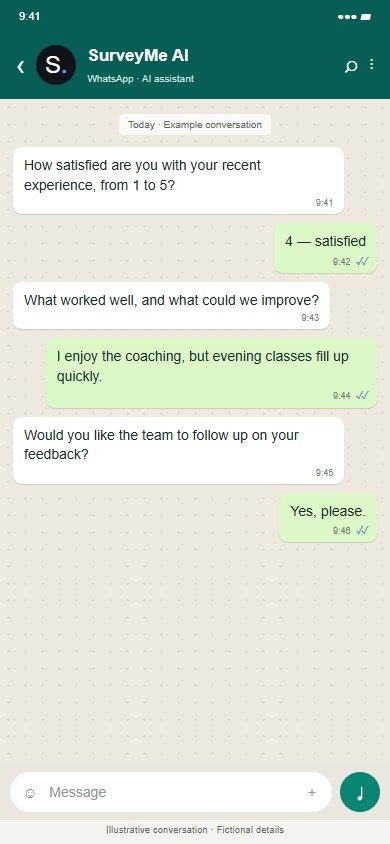
Illustrative conversation with fictional details; wording and connections are agreed before rollout.
Illustrative operating examples, not client results or a promised return.
A member is considering cancellation because the evening classes they can attend are always full. The studio manager owns the concern, discusses available alternatives and records the agreed action and callback date. The outcome is documented after follow-up, including whether the member accepted the solution or chose to leave.
Use separate categories for billing, membership freezes, cancelled classes and facilities. An authorised adjustment or alternative session is recorded with its owner. Repeated concerns should inform timetable and service reviews, rather than being marked resolved simply because a reply was sent.
Explore CaseMe in detailCapture the service issue and relevant reference, then categorise it so it reaches the right team. Use approved systems for sensitive supporting records.
Set a named owner, next action and due date. Define who reviews overdue work and how escalation should operate for this service, rather than leaving responsibility in a shared inbox.
Record what was done, the customer update and any remaining follow-up. Review repeat causes and case age so the team can improve the underlying service as well as respond to individuals.
Studio; concern category; member contact; owner; agreed action; follow-up date; outcome
Studio manager, with billing or operations support where needed
Open concerns, overdue actions, response time, recurring cancellation reasons and documented follow-up outcomes
Start with your own baseline and compare like-for-like periods after rollout. Use confirmed activity and outcomes to assess performance; illustrative examples are not guaranteed results.
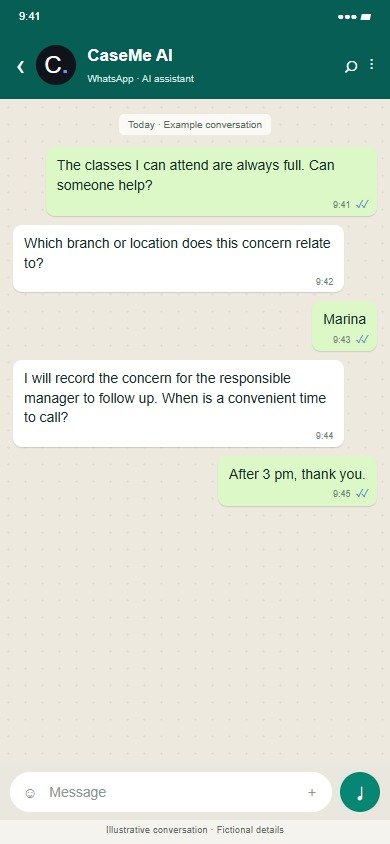
Illustrative conversation with fictional details; wording and connections are agreed before rollout.
Start with one agreed journey, its responsible team, data sources, permissions and follow-up targets. Calendar, CRM and operational-system connections, and WhatsApp or voice channels, are scoped before live use. The public demo is for exploration with fictional data.
Pro for a single studio; group pricing from three locations.